
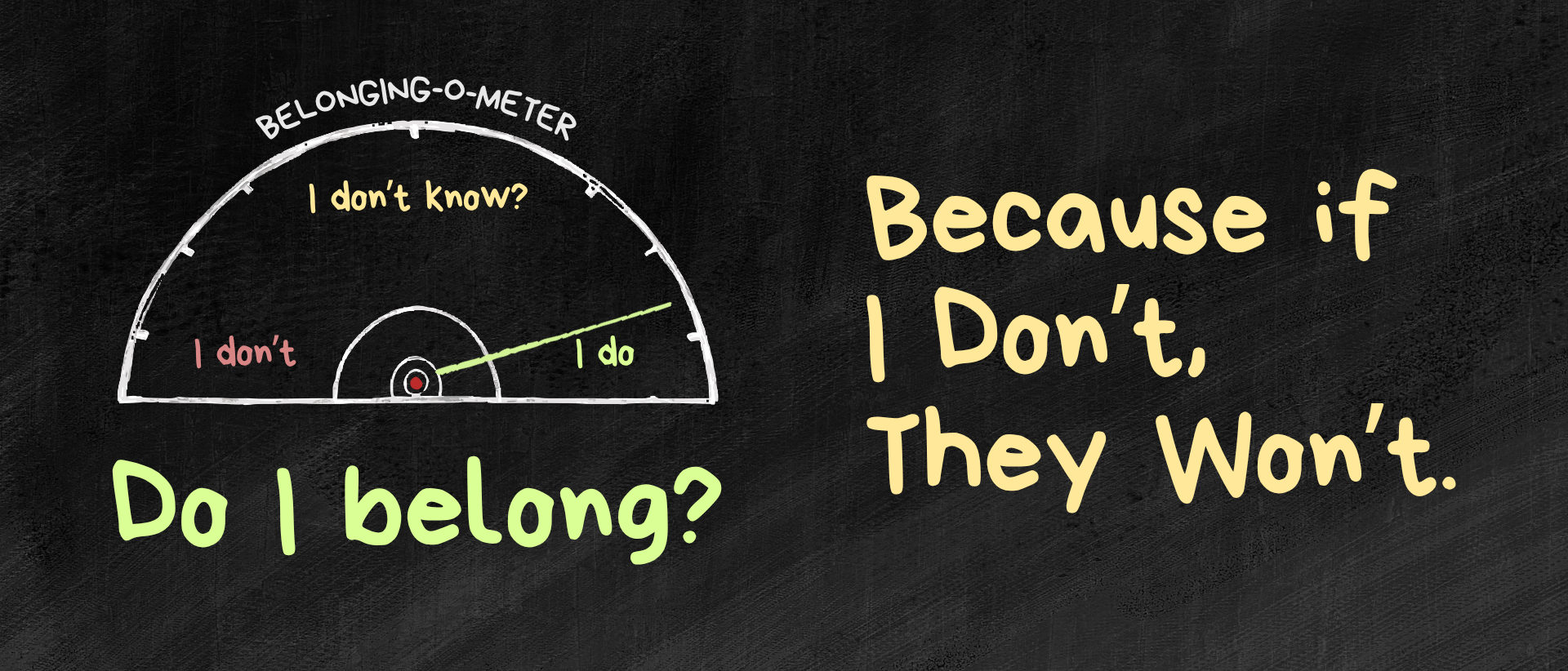
"Do I Belong?” Because If I Don’t, They Won’t.
He gave me a complete sideways look.
“This belonging stuff is interesting, Paul, but I especially don’t buy the ‘own’ part. I don’t own my employees.”
The first thing I actually noticed was the irony. “I don’t own my employees.”
Then I noticed he was wearing a wedding ring.
“You married?” I asked.
“Yes.”
“What’s her name?”
“Sheila.”
“Will you introduce Sheila to people at any holiday events this year?”
“I think so. Sure.”
“Here’s what I want you to do. When you introduce her, say it like this: ‘Hi, I’d like you to meet a wife, Sheila.’”
He leaned back, eyes wide. “I’m not f***ing doing that.”
We both busted out laughing.
Now try it yourself. Say “my employee.” Then say “an employee.” Then say “a worker.”
Feel the difference?
That difference isn’t grammar. It’s neurobiology. It’s the difference between holding a relational stake in another human being and treating them like an interchangeable part on an invoice.
The Receive-Mode-Only Trap
Most people ask “Do I belong?” like they’re checking the morning weather report. As if belonging is a passive climate that happens to them.
We’ve spent the last decade in corporate culture telling people that belonging means being “seen, heard, and understood.” Sounds warm and fuzzy. But there’s a fatal flaw in that equation: it strips you of your agency.
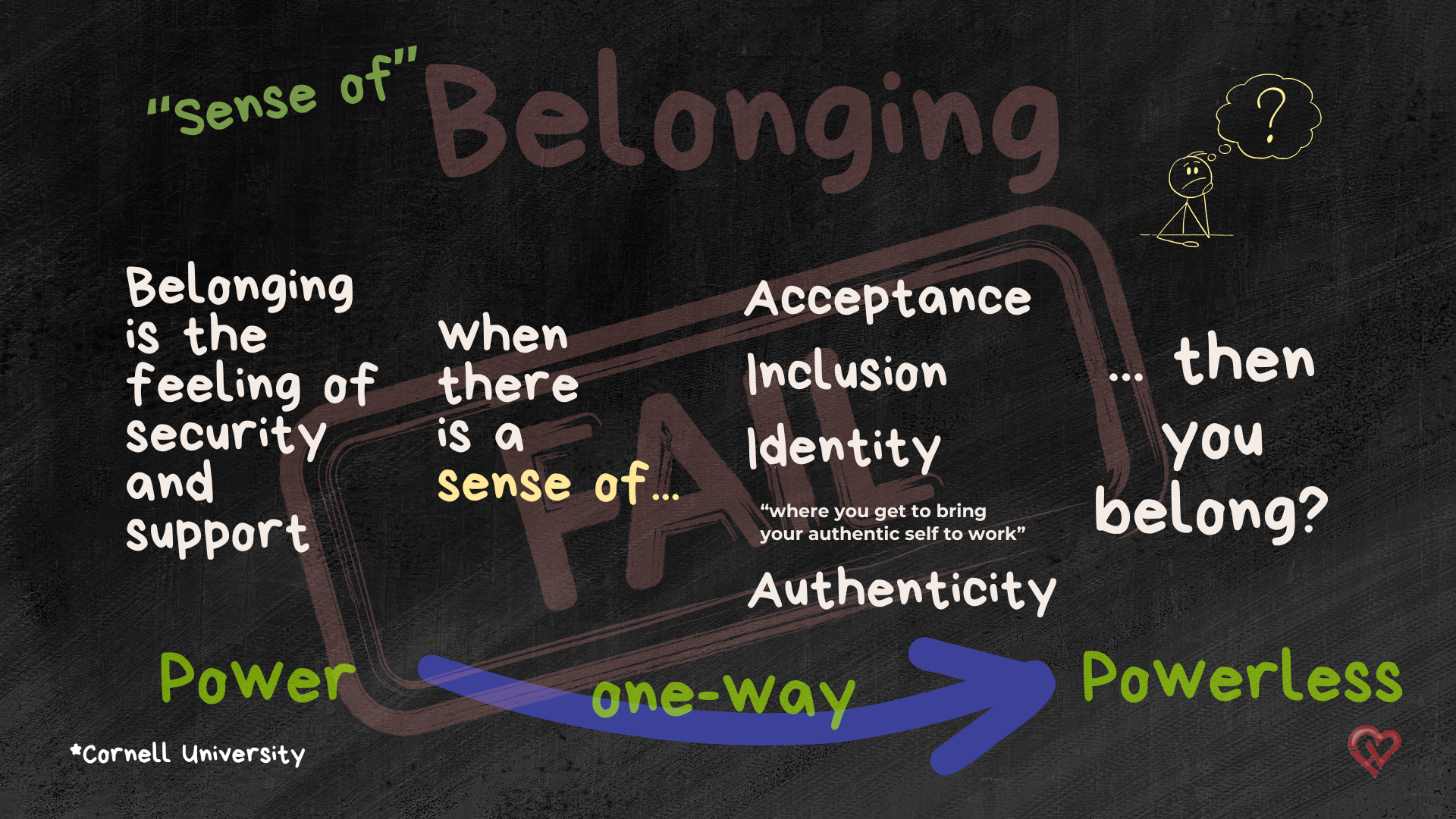
Seen: You say, “Oh, they saw me.” Then they walked right on by.
Heard: “Yeah, I heard you. I just don’t care.”
Understood: “You made complete sense. So what?”
You were seen. You were heard. You were understood. Yet you didn’t belong for a single second.
Why? Because that model puts you in receive-only mode. It’s a one-way street. If your boss or your company doesn’t shower you with validation, you’re powerless. You end up sitting in meetings waiting for someone to grant you permission to exist.
Real belonging doesn’t work like that. Belonging is an active, bilateral choice. It’s a two-way street of choosing: “We are each other’s.”
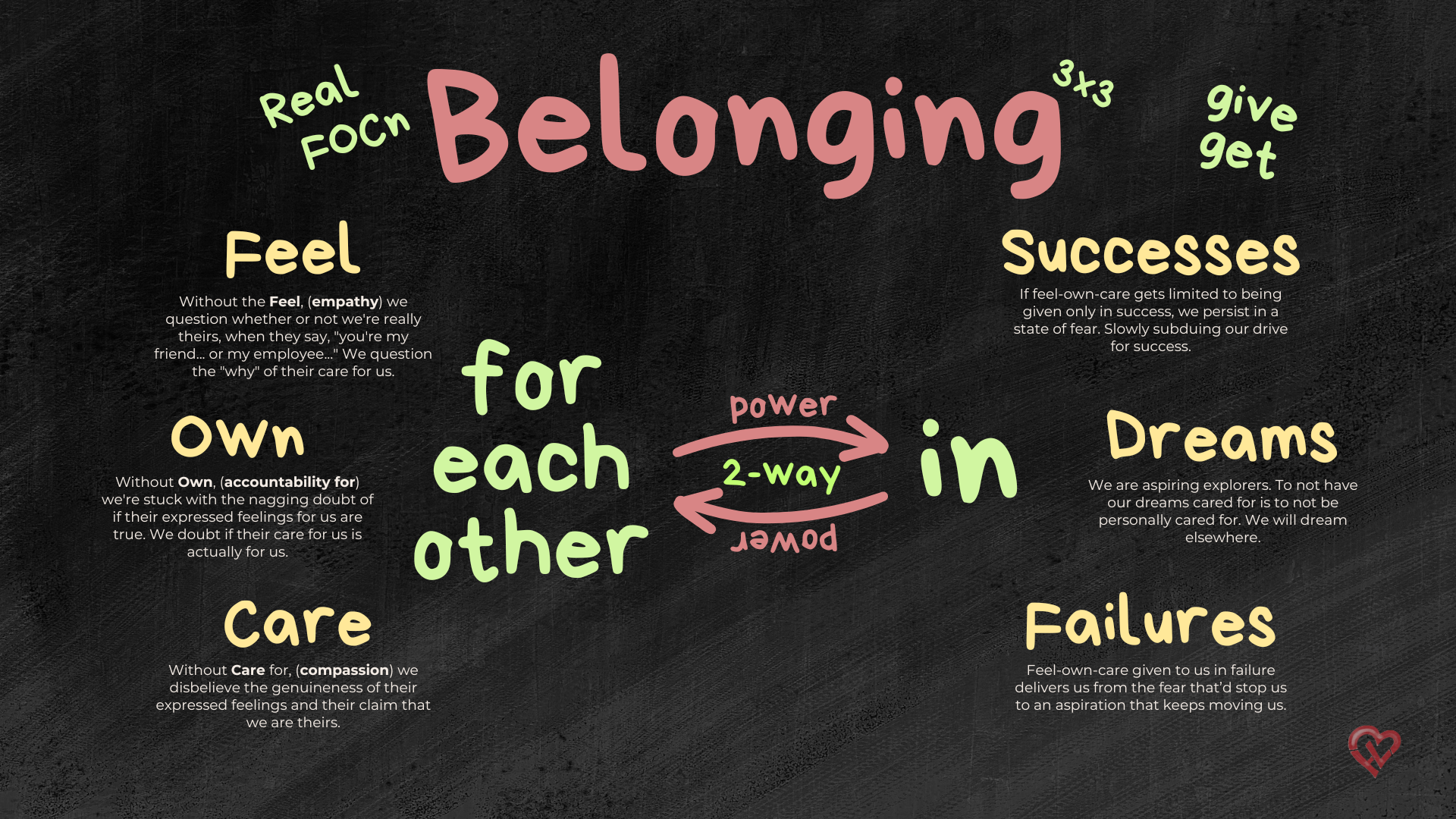
And the test isn’t some fuzzy 40-question pulse survey. It’s three choices across three moments: The 3×3.
Do I choose to Feel, Own, and Care for them in their Successes, Dreams, and Failures?
That’s nine choices. And here’s the kicker: they have to make the exact same nine choices for you.
The 3×3 Diagnostic
There’s a hollowness we all recognize when any part of this equation is missing or fake. When you break it down into everyday business language, it’s mutual Empathy (Feeling), mutual Accountability (Owning), and mutual Compassion (Caring for).
Here is what happens when you run them across the three realities of work:
1. Feel (Empathy Purposely Given)
The moment a teammate announces a promotion or shares a struggle, you make a neurological choice:
You can lean in and offer small bids of connection.
You can ignore them.
Or worse, you can show subtle disdain.
Feeling isn’t just an emotional reaction that washes over you. It’s empathy you purposely choose to extend.
Without the Feel: We question whether or not we’re really theirs when they say, “You’re my friend…” or “You’re my employee…” We question the why behind their care.
In Success: Choosing to feel means offering genuine, unthreatened celebration. If feel-own-care is limited only to success, we persist in a state of fear, slowly subduing our own drive.
In Dreams: It means getting curious about their dream until you can actually feel it getting closer.
In Failure: It means staying with them in the wreckage instead of keeping your distance to avoid the shrapnel.
2. Own (They're Mine)
That CEO was half right: you don’t own people like property. But owning someone in belonging isn’t possession. It’s claiming a mutual stake.
When you say “my wife,” you don’t hold the deed to her life. You’re declaring a covenant: her well-being is mine to help protect. Her success is mine to help build. Her pain is mine to share.
Without Own: We’re stuck with the nagging doubt of whether their expressed feelings are true. We doubt if their care is actually for us, or just for the bottom line.
In Success: You don’t stand on the sidelines like a spectator. Their victory is the tribe’s victory.
In Dreams: We are aspiring explorers. To not have our dreams owned and supported is to not be personally cared for. If you won’t own their dreams, they will dream elsewhere.
In Failure: You refuse to play the innocent bystander. You don’t point across the room and assign blame. You step up and say: “That’s on me. We own this together, and here’s how we fix it.”
3. Care For (Compassionate Action for Them)
It’s hard to admit, but you can sit in a conference room full of people you “feel” for and take zero caring action on their behalf.
Care you never act on isn’t care. It’s just an internal feeling. Caring action is the physical manifestation of belonging.
Without Care For: We disbelieve the genuineness of their words and their claim that we are theirs.
In Success: It’s publicly giving them credit where the board can see it. It’s getting them the title or compensation they earned before they have to ask for it.
In Dreams: It’s handing them the stretch assignment that terrifies them, while standing close enough that they won’t drown.
In Failure: It’s the text message five minutes after a brutal meeting: “Tough room. You’re good. Coffee in ten?” Feel-own-care given in failure is what delivers us from the fear that paralyzes into the aspiration that keeps us moving.
This makes belonging real. It's now measurable. How measurable? Well, think of it this way: would you work for a "sense of" a paycheck? Pretty sure you want a real one, see that money land in your account. Why would you settle for a sense of belonging? Your brain doesn't want that.
The Biological Shift
When a team decides to make these nine choices for each other, something radical shifts in human neurobiology.
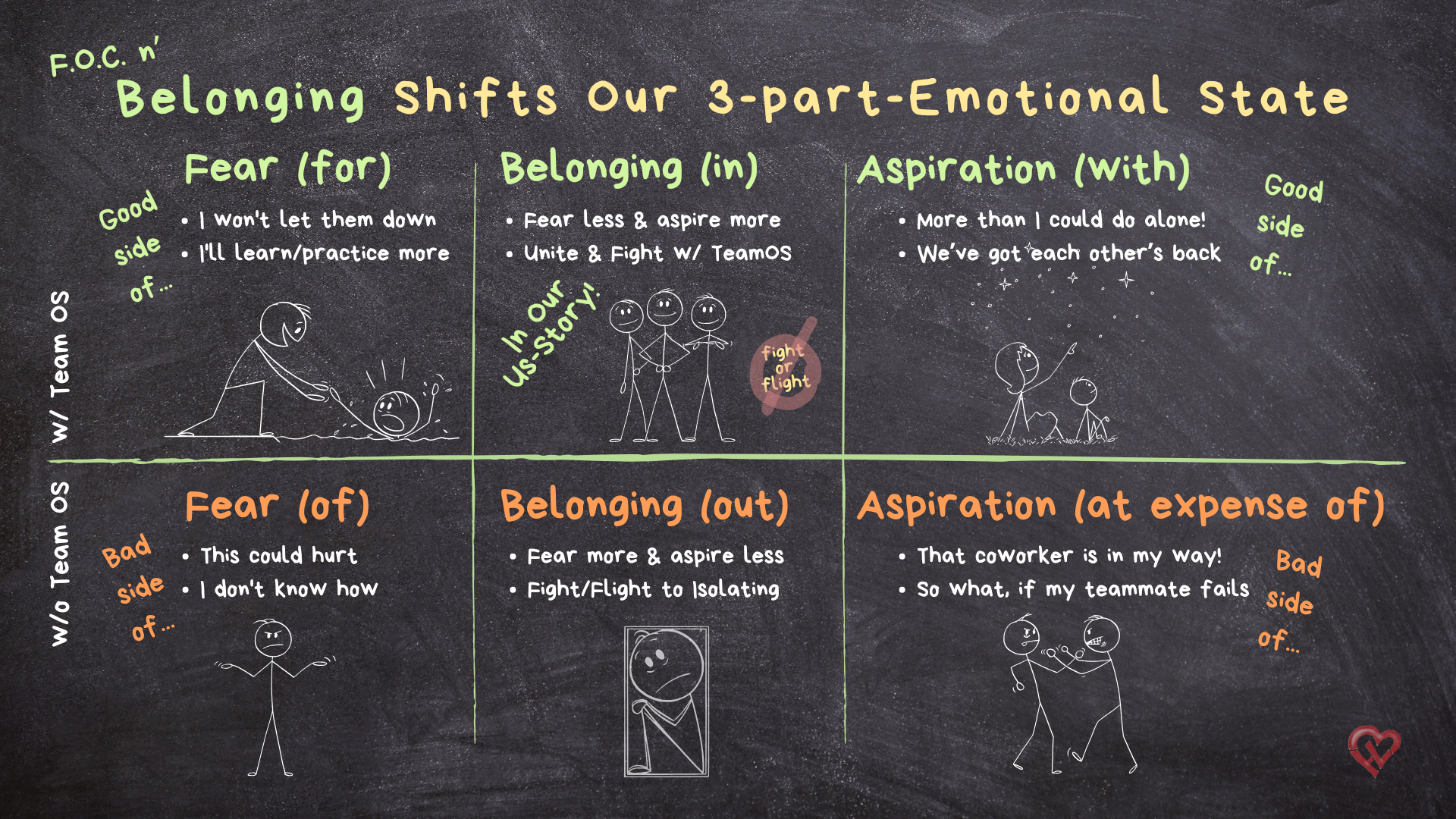
Your autonomic nervous system stops running on defensive triage. Cortisol drops. Serotonin and oxytocin flood the system.
You shift from fear of each other into fear for each other.
You shift from aspiring at the expense of each other to aspiring with each other.
To belong, you must be willing to be unsafe (vulnerable) in order to become relationally secure. You can’t engineer a sterile corporate vacuum where nobody can get hurt and expect elite performance. You offer belonging. They might reject it. But when you both choose it, you fear less inside the fire, even when the danger stays real.
Your Answer
Run the 3×3 right now.
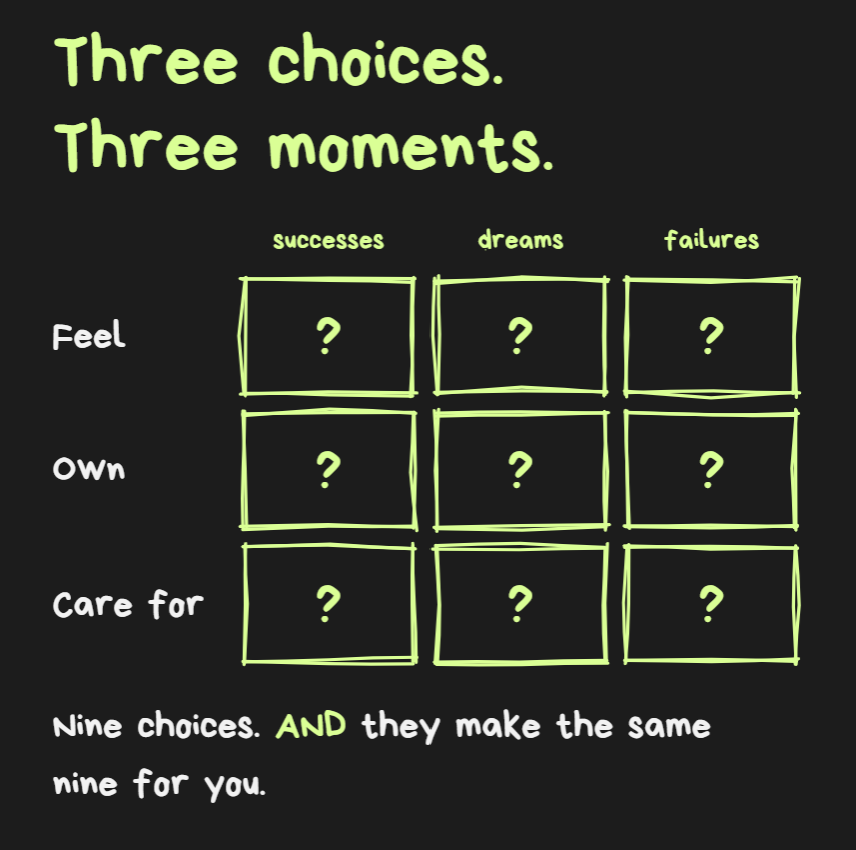
Take a teammate, a direct report, or your CEO. Run Feel, Own, and Care across their Successes, their Dreams, and their Failures.
If you answer “I don’t” to any of them, you already don’t belong.
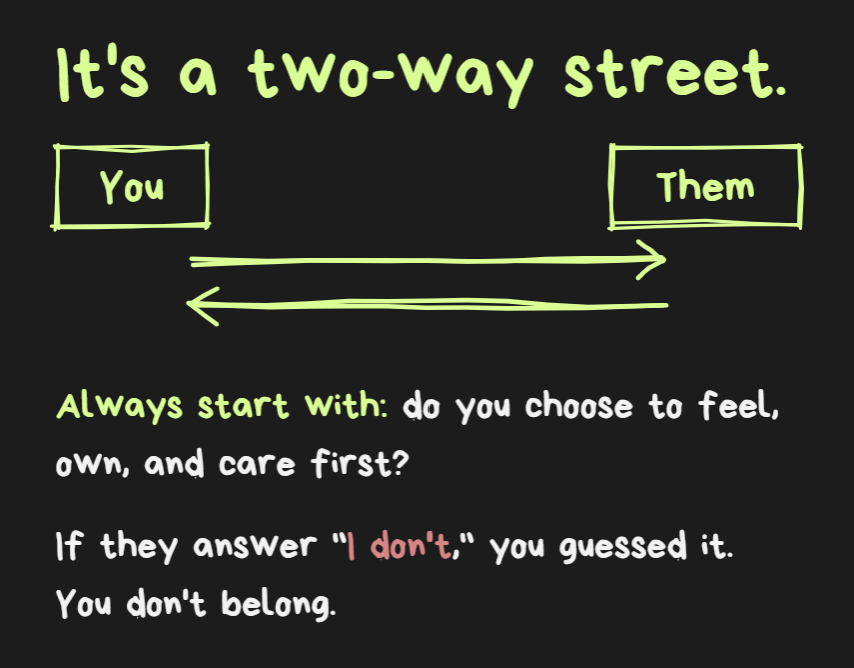
Always start in the mirror: Do you choose to feel, own, and care for them first?
And if you do, but they answer “I don’t” back to you?
Yep. You guessed it. You don’t belong there either. It’s a two-way street:
You ⟷ Them.
Never surrender your agency in belonging. When you give up your choice to belong, all you’re left with is the soul-crushing exhaustion of trying to fit in.
Don’t be a bystander to your own belonging. That’s a caustic long haul.
Ready to activate this across your leadership team?
Stop settling for passive psychological safety. Build a culture of intra-tribal performance with the free 5-Day Team OS Activation Email Course at getteamos.com.